Restaurants
Built for operators, not extra chaos.
Manage reservations, demand, waitlists, Host Stand decisions, Express priority access, and floor visibility from one product built for real restaurant service.
What Seatd helps your team do
Seatd gives staff a clearer room and gives owners controlled ways to offer reservation and waitlist access.
The host stand stays fast. Managers control the access rules. Guests get a clearer choice before they arrive.
Waitlist control+
Who uses it: Hosts and managers
Problem solved: Busy rooms lose track of who is checked in, held, ready, removed, or waiting.
Example: A host can keep a held party visible until the party is actually seated.
Try Express DemoSeatd
Live Waitlist
Do next
Seat Express Party
Express guests stay above standard guests while staff controls final seating.
Party 29
4 top
~10 min
Miller Party
4 top
Table 6
Rivera Party
2 top
18 min
Chen Party
6 top
Text sent
Reservation and access controls+
Who uses it: Owners and managers
Problem solved: Demand spikes are valuable, but reservations and waitlist priority need different rules.
Example: A manager uses Fixed Reservations for premium times, Dynamic for changing demand, or Express for a long walk-in wait.
Compare all three modelsSeatd
Express Guest Flow
Standard wait
45-60
minutes
Seatd Express
~10
minute estimate
Party 29
Protected for the next qualifying table. Final seating remains with the restaurant.
Demand Pulse+
Who uses it: Owners and shift leads
Problem solved: Managers need better demand signals before the waitlist becomes painful.
Example: A manager sees game-day demand building and adjusts staffing, reservation inventory, or Express limits.
Book a PilotSeatd
Manager View
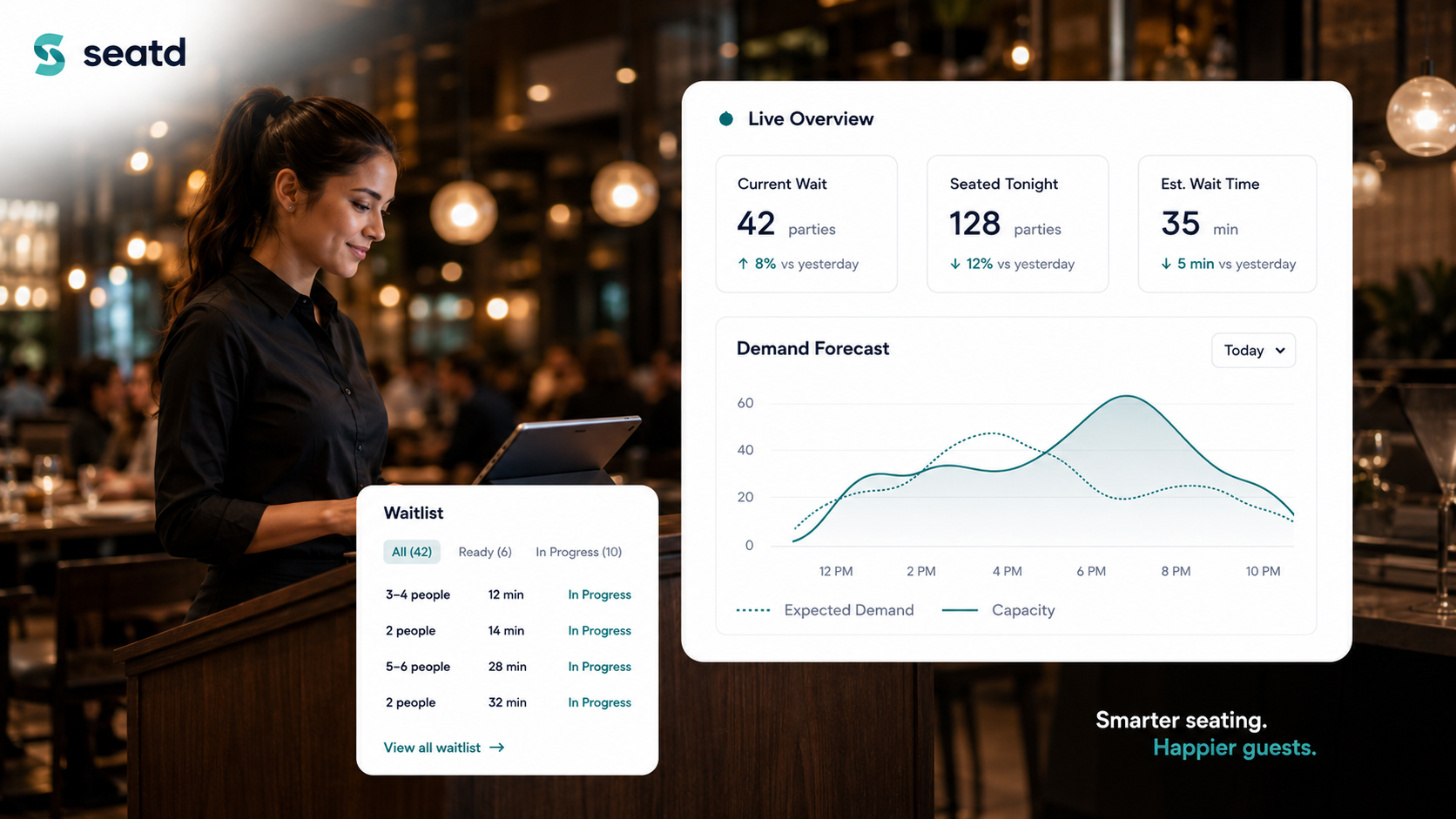
Current wait
42 parties
Express active
6 parties
Open tables
8 tables
Demand pulse
Game-day high
Managers get enough signal to staff the host stand, pause Express, or open more eligible tables before the room backs up.
Floor plan visibility+
Who uses it: Hosts and floor managers
Problem solved: A waitlist is only useful if staff can see which tables actually qualify for the next party.
Example: Bar seats and ineligible tables do not get treated like normal available dining tables.
View floor-plan toolsSeatd
Floor Map
12
Available
14
Seated 42m
16
Reserved
18
Cleaning
22
Held
24
Available
Room signal
See what can actually be seated.
Hosts can see available, seated, reserved, cleaning, and held tables without guessing from paper notes.
Revenue projections+
Who uses it: Owners
Problem solved: Owners need to understand potential upside without turning the Host Stand into a spreadsheet.
Example: A restaurant compares Fixed Reservations, Dynamic Reservations, and Express before starting a pilot.
See pricingSeatd
Manager View
Current wait
42 parties
Express active
6 parties
Open tables
8 tables
Demand pulse
Game-day high
Managers get enough signal to staff the host stand, pause Express, or open more eligible tables before the room backs up.
Demand clarity for the whole room
Seatd
Manager View
Current wait
42 parties
Express active
6 parties
Open tables
8 tables
Demand pulse
Game-day high
Managers get enough signal to staff the host stand, pause Express, or open more eligible tables before the room backs up.
Still skeptical?
Good. Ask the hard questions first.
Ralphie answers the questions restaurant owners usually ask first, including customer backlash, regulars, Express fairness, pricing, no-shows, kitchen capacity, and AI.
Ready to put demand to work?
Explore the platform, compare the three models, or start a pilot conversation with Seatd.