Seatd restaurant platform

Tables on demand.

Reservations, waitlist, Host Stand, Floor Map, guest management, table status, manager controls, and demand-based access revenue in one operating platform.

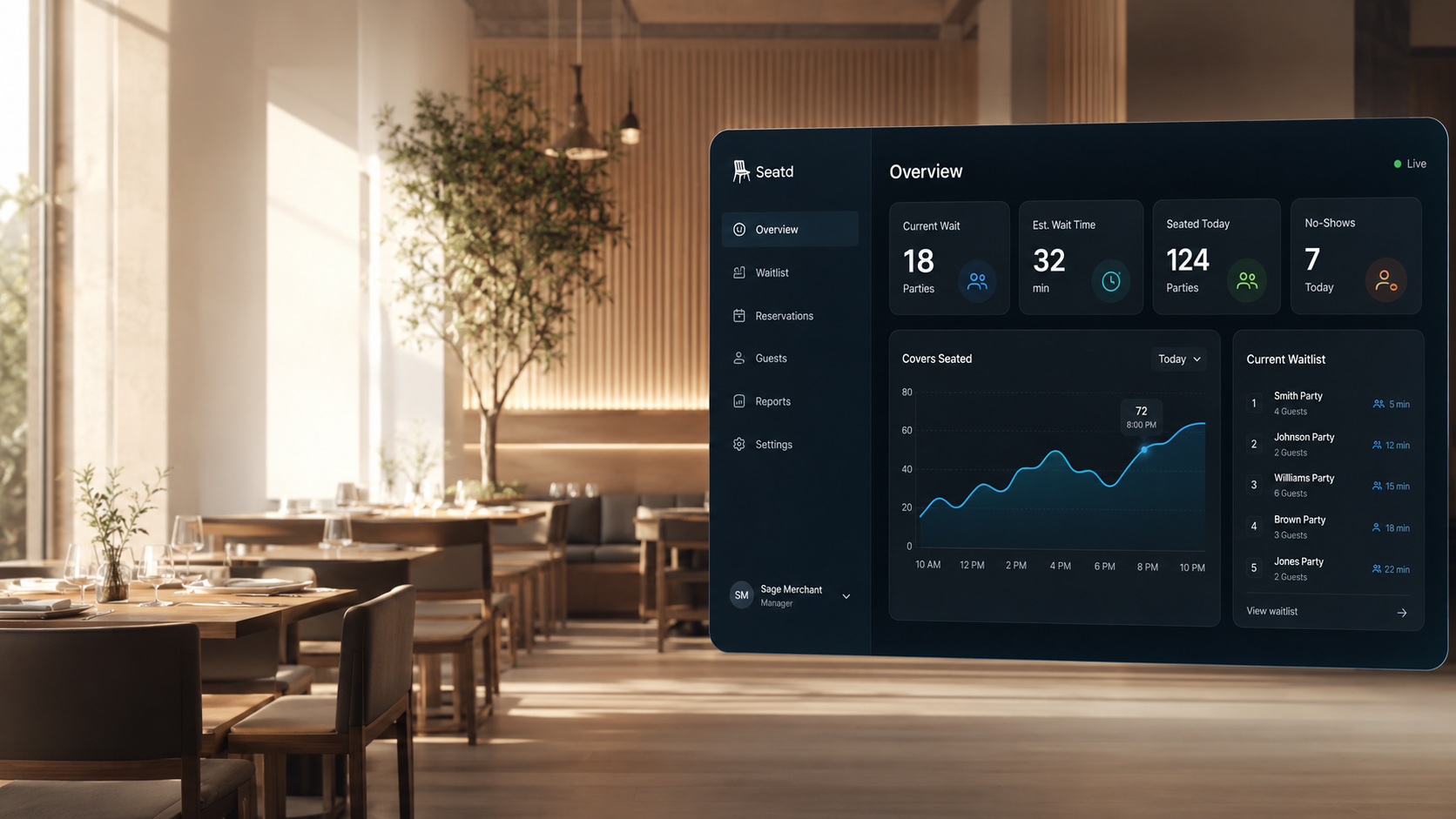
Seatd dashboard preview with restaurant waitlist and demand controls.

Choose the right model

Three ways to turn demand into a better guest experience.

Fixed and Dynamic are reservation models. Express is a separate priority-waitlist model. All three connect to the same Seatd restaurant platform.

Reservation model01

Fixed Reservations

For reservation-focused restaurants that want a predictable price on premium tables and peak reservation times.

The restaurant selects the times, tables, sections, price, and quantity released. Off-peak reservations can remain free.

Illustrative example7:00 PM premium reservation - $15 per table
Explore Fixed
Reservation model02

Dynamic Reservations

For restaurants that want reservation and walk-in access prices to adjust through the evening as demand changes.

Managers approve minimums, maximums, eligible inventory, daily limits, overrides, and pause controls.

Illustrative examplePeak price moves from $5 to $18 inside manager limits
Explore Dynamic
Waitlist model03

Express

For high-volume, walk-in-heavy restaurants that want to offer paid priority toward the next qualifying table.

The regular waitlist stays free. Express adds priority while party size, table eligibility, and restaurant control still matter.

Illustrative example45-60 minute standard wait; about 10 minute Express estimate
Explore Express

The platform

Every model connects to the room.

Seatd is more than an access offer. It gives restaurant teams the operating context required to run reservations, walk-ins, tables, and guest flow together.

RS

Reservations

Free and paid booking times, protected arrival windows, table context, and Host Stand sync.

Example: The reservations workflow stays connected to the same live room.

Explore Reservations
WL

Waitlist

Standard, checked-in, held, ready, Express, seated, cancelled, and removed states stay clear.

Example: The waitlist workflow stays connected to the same live room.

Explore Waitlist
HS

Host Stand

See the current party, protected next party, table state, and practical next action.

Example: The host stand workflow stays connected to the same live room.

Explore Host Stand
FM

Floor Map

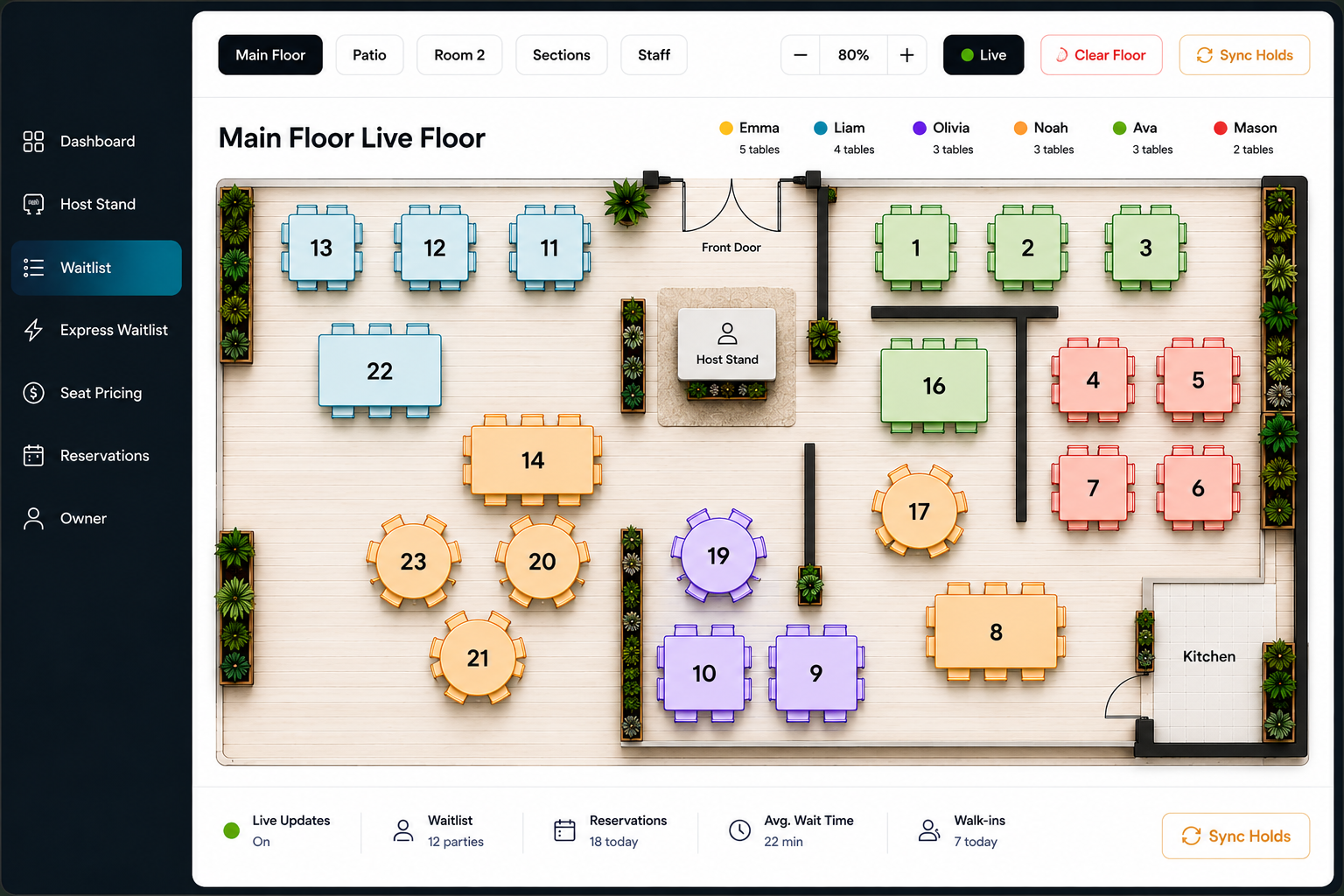
Manage table capacity, sections, status, bars, fixtures, and eligible inventory.

Example: Bar and ineligible tables stay out of automatic recommendations.

Explore Floor Map
GM

Guest management

Keep party details, arrival time, notes, source, status, and seating context together.

Example: The guest management workflow stays connected to the same live room.

Explore Guest management
MG

Manager controls

Set access rules, review demand, pause paid access, and keep staff in control.

Example: The manager controls workflow stays connected to the same live room.

Explore Manager controls

Seatd

Host Stand Command

Pilot data

Do next

Table 6 is protected

Miller Party is checked in. Keep Table 6 held until the current party leaves.

Express

Party 29

4 top

~10 min

Checked in

Miller Party

4 top

Table 6

Waiting

Rivera Party

2 top

18 min

Ready

Chen Party

6 top

Text sent

Money, explained plainly

New revenue from demand restaurants already have.

Seatd receives a transaction share when a paid reservation or Express purchase succeeds. Restaurants keep control of what is offered, when it is offered, and when paid access is paused.

Interactive calculator

Estimate restaurant net revenue

Change the assumptions to see an illustrative estimate. This is not a forecast or promise.

Model assumption: 4 paid reservations per night at an average of $15, with 60% estimated to the restaurant.

Per night

$36

Per week

$180

Per month

$779

Per year

$9,360

Illustrative estimated restaurant revenue before processing fees, refunds, taxes, and cancellations. Actual results may vary.

From the founder

Why I built Seatd

“I worked in restaurants and kept seeing the same thing. Restaurants spend a fortune creating demand, then give the most valuable part of that demand away for free.”

Ralphie Taylor Allen built Seatd around a simple question: can restaurants capture the value of peak demand without hurting the guest experience?

Ready to put demand to work?

Explore the platform, compare the three models, or start a pilot conversation with Seatd.

Restaurant FAQ

Straight answers before you get started.

How Seatd works, what restaurants control, how paid access is handled, and what happens when plans change.

Understanding Seatd

What is Seatd?

Seatd is a restaurant reservation, waitlist, Host Stand, Floor Map, guest management, and demand-based access platform. Restaurants can keep standard reservation inventory free while choosing to offer premium access on selected high-demand reservation times or through Seatd Express.

What is a guest actually paying for?

A Seatd access fee is for optional premium access, timing, certainty, or priority. It is separate from the guest's food and beverage bill. Depending on the Seatd model selected by the restaurant, the purchase may secure access to a high-demand reservation time, a defined seating guarantee, or priority through Seatd Express.

Does Seatd make every reservation paid?

No. Restaurants control their inventory. Reservation times can remain completely free, be offered with paid premium access, or use a combination of both. Seatd is designed to let the restaurant decide where paid access makes sense.

Can free and paid reservations exist at the same restaurant?

Yes. A restaurant can keep most reservation times free and offer premium access only on selected high-demand times.

Example: A restaurant could keep 5:00 PM and 8:30 PM free while offering premium access to a limited number of 7:00 PM and 7:30 PM reservations.

What are Fixed, Dynamic, and Express?

Fixed and Dynamic are reservation access models. Fixed allows a restaurant to set premium access pricing for selected reservation times. Dynamic allows pricing to respond to the restaurant's configured demand model. Seatd Express is separate from reservations and provides an optional priority waitlist experience. All three connect to the same Seatd restaurant operating platform.

Restaurant Control

Who decides which reservation times use paid access?

The restaurant does. Seatd gives restaurant operators control over which reservation times are available, which remain free, which offer premium access, the available capacity, and when paid access is paused.

Who sets the access price?

The restaurant controls its access pricing within the Seatd tools provided for the selected model. Different reservation times can have different pricing.

Can different times have different prices?

Yes. Seatd supports individual reservation times with independent pricing and capacity.

Example: A restaurant could offer 6:00 PM at $10, 7:00 PM at $20, leave 8:30 PM free, and keep other times unavailable.

Can I start with only a few reservation times?

Yes. Restaurants do not have to move their entire reservation inventory into paid access. A restaurant can start with a small number of high-demand times, evaluate the experience, and expand or adjust its use of Seatd.

Can I pause paid access?

Yes. Restaurant managers retain control over paid access and can pause or adjust what is being offered through Seatd.

Do I have to move everything to Seatd all at once?

No. Seatd's product supports phased adoption. Restaurants can begin with selected inventory and move additional reservation activity into Seatd as appropriate for their operation.

Can Seatd work while I still have reservations coming from another source?

Yes. Seatd is designed to support restaurant operations during a transition. Existing reservations can be imported into Seatd so staff can continue working from a unified reservation view.

Moving Existing Reservations

What happens to reservations I already have booked somewhere else?

Seatd supports importing existing future reservations so they remain visible to restaurant staff after a platform transition. The import process is designed to preserve core reservation details such as guest name, reservation date and time, party size, contact information when available, notes, and external booking identifiers.

Can I import reservations by CSV?

Yes. Seatd supports CSV reservation imports using common reservation fields and includes duplicate protection so the same external reservation is not unintentionally imported multiple times.

Will existing guests lose their reservation when I switch?

Imported reservations remain part of the restaurant's Seatd reservation workflow. Seatd also supports sending updated confirmation emails informing guests that the restaurant has changed reservation platforms while confirming that their existing reservation remains intact.

Do guests have to make their reservation again after an import?

No. A properly imported existing reservation remains a reservation. The guest does not need to rebook simply because the restaurant changed reservation systems.

Revenue & Payouts

How does Seatd make money?

Seatd receives a transaction share when a paid Seatd access purchase succeeds. The current Seatd access revenue split is 60% to the restaurant and 40% to Seatd, subject to applicable processing costs, refunds, taxes, cancellations, and adjustments.

How much does my restaurant receive?

The restaurant share is 60% of the applicable paid access amount.

Example: If a guest purchases $20 of Seatd premium access, the restaurant share is $12 and the Seatd share is $8 before applicable processing costs, refunds, taxes, cancellations, or other adjustments.

Is the Seatd access fee part of the guest's dinner bill?

No. The Seatd access purchase is separate from the guest's food and beverage bill. The restaurant continues to handle the guest's meal, drinks, gratuity, and other in-restaurant charges through its normal systems.

Where can a restaurant see its Seatd money?

Seatd's restaurant financial tools are designed to show the restaurant's Seatd economics alongside Stripe connected-account information, including relevant pending and available balances, transaction activity, and payout history.

When does the restaurant get paid?

Paid access uses the restaurant's connected Stripe account. Actual payout timing depends on the connected account's Stripe payout schedule, account status, banking system, and bank processing time. Seatd does not promise a universal number of days because payout timing can vary.

Do restaurants invoice Seatd for their share?

No. For paid access processed through Seatd's Stripe Connect flow, the restaurant's share is routed through its connected Stripe account. The restaurant does not need to create a separate invoice to Seatd for each reservation.

Accounting & Tax

How should my restaurant account for Seatd revenue?

Seatd access revenue should be tracked separately from normal food, beverage, gratuity, and other restaurant sales. Seatd reporting is intended to distinguish access-fee activity, restaurant share, Seatd share, refunds or adjustments, and payouts. Each restaurant should have its accountant determine the appropriate general-ledger classification for its business.

How is sales tax handled on Seatd access fees?

Tax treatment can vary by jurisdiction and transaction structure. Seatd does not characterize premium access as universally taxable or universally tax-free. Restaurants should review the applicable treatment with their accountant or tax adviser, and Seatd will maintain transaction reporting needed to support appropriate accounting and tax treatment.

Payments & Security

Who processes Seatd payments?

Seatd uses Stripe for its paid reservation and connected-account payment infrastructure.

Does Seatd need to store my guest's raw credit card number?

Card payment information is handled through Stripe's payment infrastructure rather than being entered into the restaurant's Seatd dashboard.

Does my restaurant need to connect a payment account before offering paid access?

Yes. Paid access requires the restaurant's Stripe connected account to complete the required onboarding and payment readiness checks. Free reservation inventory can remain separate from paid access.

Seating Guarantee

What is the Seatd seating guarantee?

For eligible paid reservations, the restaurant selects a defined seating guarantee before the reservation is purchased. The guarantee tells the guest the latest promised seating time associated with that paid reservation.

How long can the seating guarantee be?

Seatd currently supports 10-minute, 15-minute, or 20-minute seating guarantees. A restaurant cannot set a paid seating guarantee longer than 20 minutes.

Can the restaurant extend the guarantee after the guest purchases?

No. The guarantee selected for that purchased reservation is locked for that guest. It cannot be extended after purchase.

What happens if the restaurant misses the seating guarantee?

If a timely checked-in guest is ready to be seated and the restaurant fails to seat the guest by the exact purchased guarantee deadline for a restaurant-caused reason, the guest is eligible for a full refund of the qualifying Seatd access purchase under the Seatd Refund & Reservation Guarantee Policy. The restaurant bears the economic responsibility for the restaurant-caused refund. Seatd also assesses the restaurant an additional $2 missed-guarantee charge. The $2 missed-guarantee charge is separate from the guest refund.

Is the guarantee always 20 minutes?

No. Twenty minutes is the maximum. A restaurant can select a 10-minute, 15-minute, or 20-minute guarantee for eligible paid access. The purchased guarantee is the one that applies to that guest.

Cancellations & Refunds

What is Seatd's advance cancellation refund policy?

If a guest cancels an eligible paid Seatd reservation at least 24 hours before the scheduled reservation time, the guest is eligible for a full refund of the qualifying Seatd access purchase under the Seatd Refund & Reservation Guarantee Policy. For this ordinary advance cancellation, the restaurant returns or relinquishes its applicable 60% transaction share and Seatd returns or relinquishes its applicable 40% transaction share so the guest receives the full qualifying Seatd access amount. Processing fees, taxes, provider mechanics, and legally required adjustments may be handled according to applicable payment-processor rules and law.

What happens if a guest cancels inside 24 hours?

The standard advance-cancellation refund applies when cancellation occurs at least 24 hours before the reservation. A cancellation inside that window does not qualify for the standard 24-hour advance refund unless another qualifying refund condition applies or the applicable reservation terms provide otherwise.

What happens if the restaurant cancels the reservation?

If the restaurant cancels an eligible paid reservation, cannot provide the purchased access, and the guest did not materially breach the reservation terms, the guest is entitled to the qualifying refund under the Seatd Refund & Reservation Guarantee Policy.

What happens if the restaurant cannot seat the guest within the purchased guarantee?

If a timely checked-in guest is ready to be seated and the restaurant fails to seat the guest by the exact purchased guarantee deadline for a restaurant-caused reason, the guest is eligible for a full refund of the qualifying Seatd access purchase. The restaurant bears the economic responsibility for the restaurant-caused refund, and Seatd assesses the restaurant an additional $2 missed-guarantee charge. The $2 missed-guarantee charge is separate from the guest refund.

How quickly does a refund appear on the guest's card?

After a refund is approved and submitted for processing, the time it takes to appear on the guest's account depends on the payment processor, card network, and guest's financial institution.

Can a restaurant dispute a refund decision?

Yes. Seatd's restaurant refund workflow supports restaurant review and dispute handling. Restaurant operators can acknowledge a refund case or request review when they believe the circumstances require additional investigation.

What if the restaurant and guest disagree about whether the guarantee was met?

Seatd records operational reservation data such as check-in and seating activity that can be used when reviewing a disputed guarantee. Seatd may review the available reservation record and circumstances before resolving a disputed refund case.

What if the guest arrives late?

Timely guest arrival matters to a seating guarantee. Seatd evaluates the guarantee using the recorded reservation and check-in information together with the applicable arrival terms. No specific late-arrival grace period applies unless it exists in the applicable product or published policy.

Guest Experience

Why would a guest pay when reservations are normally free?

Seatd is optional premium access. A guest may choose to pay when the timing, certainty, or priority is worth more to them than waiting for standard availability. Restaurants can continue offering free reservation inventory alongside premium access.

Is Seatd charging people just to eat at a restaurant?

No. The guest's meal is still purchased from the restaurant normally. A Seatd charge is for optional premium access, reservation timing, seating certainty, or priority depending on the Seatd product being used.

What does the guest receive in exchange for paid reservation access?

For an eligible paid reservation, the guest receives access to the selected premium reservation inventory and the seating guarantee displayed before purchase. If the restaurant fails to deliver the qualifying seating guarantee, the Seatd Refund & Reservation Guarantee Policy applies.

Can guests still choose free availability?

Yes, whenever the restaurant offers free inventory. Seatd does not require every reservation time to carry an access price.

Company & Trust

Who operates Seatd?

Seatd is operated by Seatd LLC.

Is Seatd only a reservation payment tool?

No. Seatd combines reservations, waitlist, Host Stand operations, Floor Map and table status, guest management, restaurant controls, and optional demand-based access models in one operating platform.

How does Seatd keep activity tied to the correct restaurant and booking?

Seatd uses server-side restaurant and reservation records to keep operational and payment activity tied to the correct restaurant and booking.